
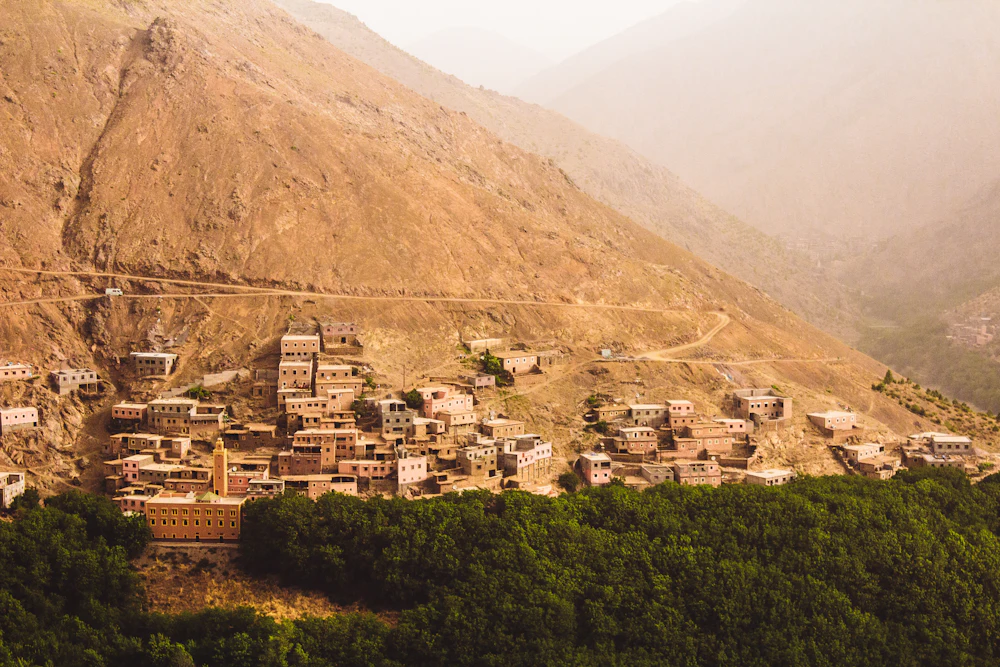
Quick answer: Morocco is warm and sunny most of the year, but the climate changes a lot by region. Spring (March–May) and autumn (late September–November) are the most comfortable everywhere. Summer is very hot inland and in the Sahara (40 °C+), while the Atlantic coast stays mild. Winter days are pleasant and sunny, but nights are cold in the desert and the Atlas.
Average daytime temperatures by month
Approximate average maximum temperatures (°C). Night temperatures are 10–15 °C lower, and up to 20 °C lower in the desert.
| Month | Marrakech | Fes | Merzouga (Sahara) | Essaouira |
|---|---|---|---|---|
| January | 18 | 16 | 18 | 18 |
| February | 20 | 17 | 21 | 18 |
| March | 23 | 20 | 25 | 19 |
| April | 25 | 22 | 29 | 20 |
| May | 29 | 26 | 34 | 21 |
| June | 33 | 31 | 39 | 22 |
| July | 37 | 35 | 43 | 22 |
| August | 37 | 35 | 42 | 23 |
| September | 32 | 30 | 36 | 23 |
| October | 28 | 25 | 30 | 22 |
| November | 22 | 20 | 23 | 20 |
| December | 19 | 17 | 19 | 19 |
For live forecasts, check the national weather service, Maroc Météo.
Winter (December – February)
Sunny days of 17–20 °C in Marrakech and the south, cold nights (2–6 °C) and possible snow on the High Atlas. Desert nights can drop below 0 °C, but camps provide thick blankets. The north (Chefchaouen, Tangier) gets most of its rain now. More details in Morocco in winter.
Spring (March – May)
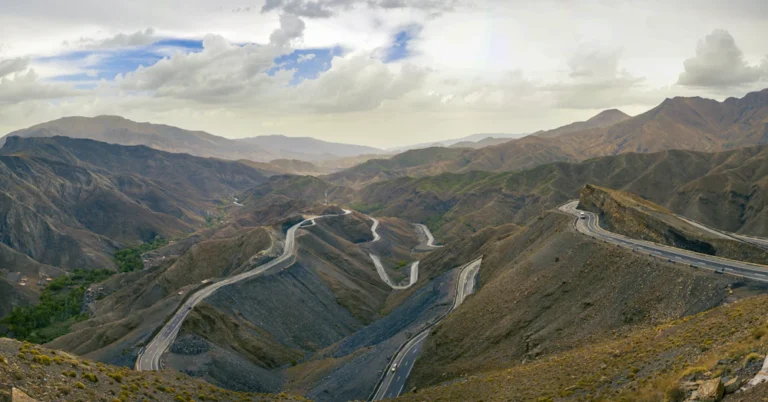
The best season for most trips: green valleys, almond blossom in the Atlas in February–March, roses in the Dades valley in May, and comfortable desert temperatures. It is also high season, so book desert camps and riads early for Easter.
Tours related to this guide
- 4-Day Desert Tour from Marrakech to Merzouga
- 7-Day Tour: Marrakech, Desert, Fes & Chefchaouen
- Imlil Valley & Toubkal Day Trip
Want a trip built around your dates? Ask for a free tailor-made itinerary →
Summer (June – August)
Inland cities often pass 38–40 °C and the Sahara can reach 45 °C at midday. Desert tours still run, with early starts, a long siesta and camel rides at sunset. The Atlantic coast (Essaouira, Agadir) and the Atlas villages are the coolest places to be.
Autumn (September – November)
Temperatures fall back to pleasant levels from late September. October and November are excellent for combining cities, mountains and desert, with fewer crowds than spring.
Best months by type of trip
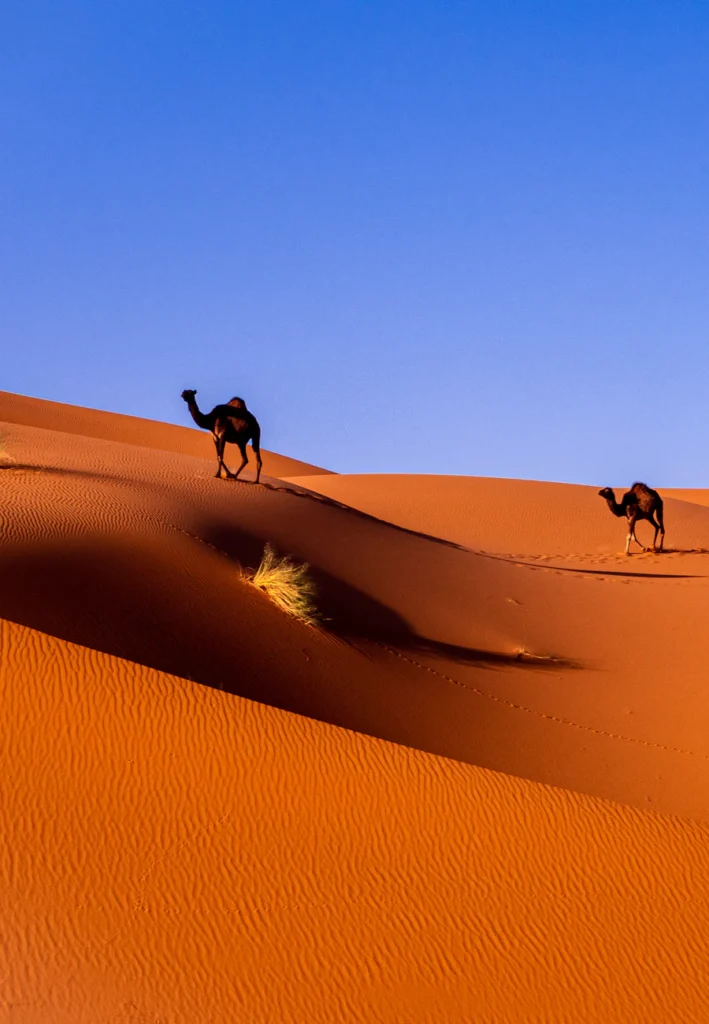
- Sahara desert: March–May and October–November.
- Cities (Marrakech, Fes): March–May, October–December.
- Hiking in the Atlas / Toubkal: May–June and September–October.
- Beach and surf: June–September for swimming; October–March for surf waves.
- Budget travel: November, early December and January (outside holidays).
Frequently asked questions
What is the hottest month in Morocco?
July and August. Marrakech and Fes average around 35–37 °C and the Sahara can exceed 45 °C, while the Atlantic coast stays around 22–23 °C.
Does it rain a lot in Morocco?
Not in the south. Most rain falls between November and March in the north and on the Atlantic side. Marrakech and the desert are dry for most of the year.
Is it cold in Morocco in winter?
Days are mild and sunny, but nights are cold, especially in the desert, the Atlas and Fes. Bring a warm jacket and layers from December to February.
What is the best month to visit the Sahara in Morocco?
October, November, March and April have warm days and cool nights. Avoid midday heat in June–August and pack warm clothes for December–February nights.
Keep reading
Written by the Todo Marruecos Tours team, local guides and drivers based in Morocco. Last updated: November 2026.