
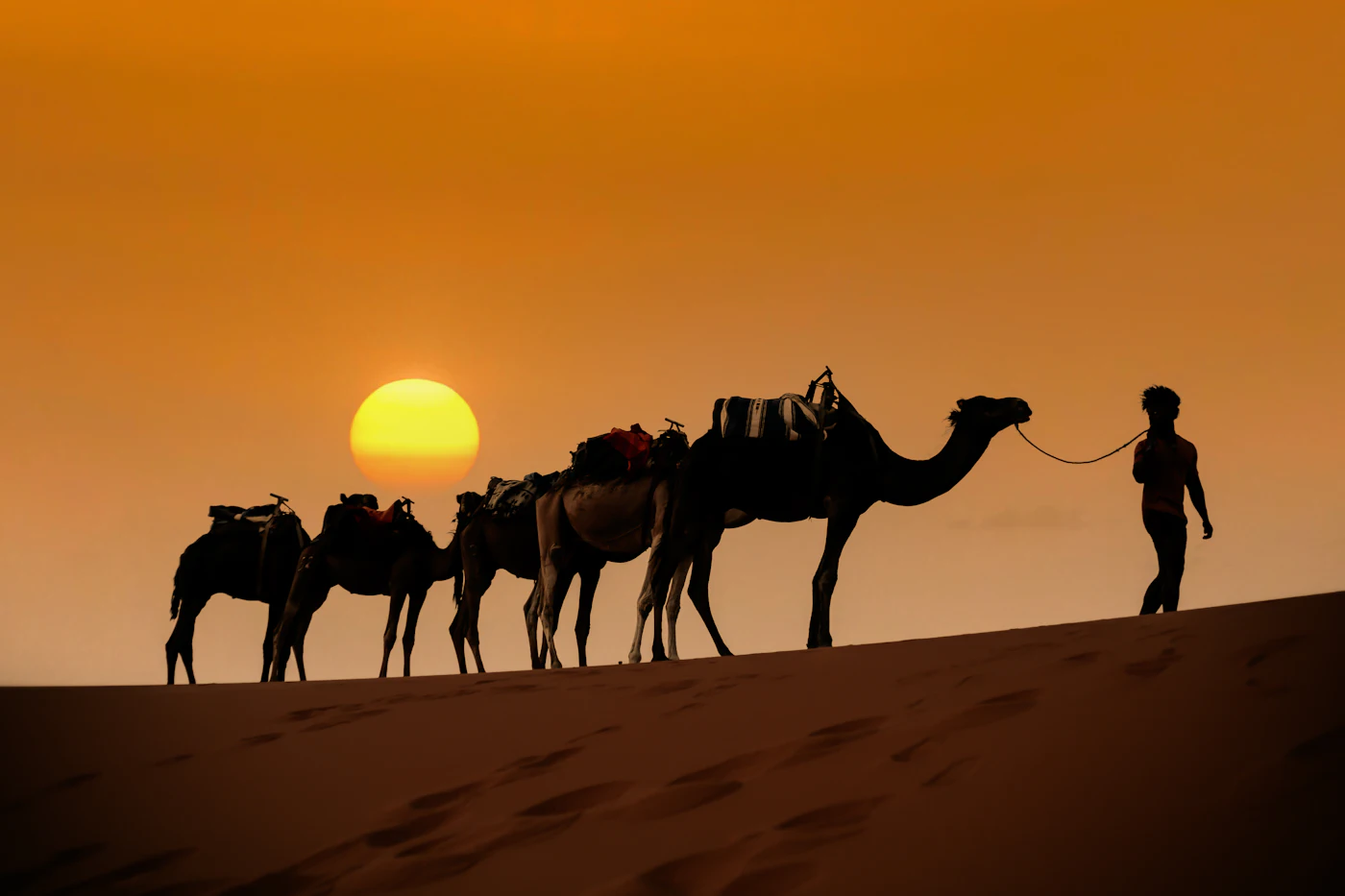
Quick answer: Merzouga has a hot desert climate: very hot summers (40–45 °C by day), mild sunny winters (around 18–20 °C) and big day-night differences all year. Winter nights can drop to 0 °C. The most comfortable months are October–November and March–April. Rain is rare, but spring can bring windy days and sandstorms.
Merzouga temperatures by month
| Month | Day (°C) | Night (°C) | What to expect |
|---|---|---|---|
| Jan | 18 | 2 | Sunny, very cold nights |
| Feb | 21 | 5 | Pleasant days |
| Mar | 25 | 9 | Ideal, some wind |
| Apr | 29 | 13 | Ideal, windiest month |
| May | 34 | 18 | Warm to hot |
| Jun | 39 | 23 | Hot |
| Jul | 43 | 27 | Extreme heat |
| Aug | 42 | 26 | Extreme heat, rare storms |
| Sep | 36 | 21 | Hot, cooling down |
| Oct | 30 | 15 | Ideal |
| Nov | 23 | 8 | Ideal |
| Dec | 19 | 3 | Sunny, cold nights |
Values are approximate long-term averages. Check the forecast a few days before your trip.
Day and night: the desert extremes
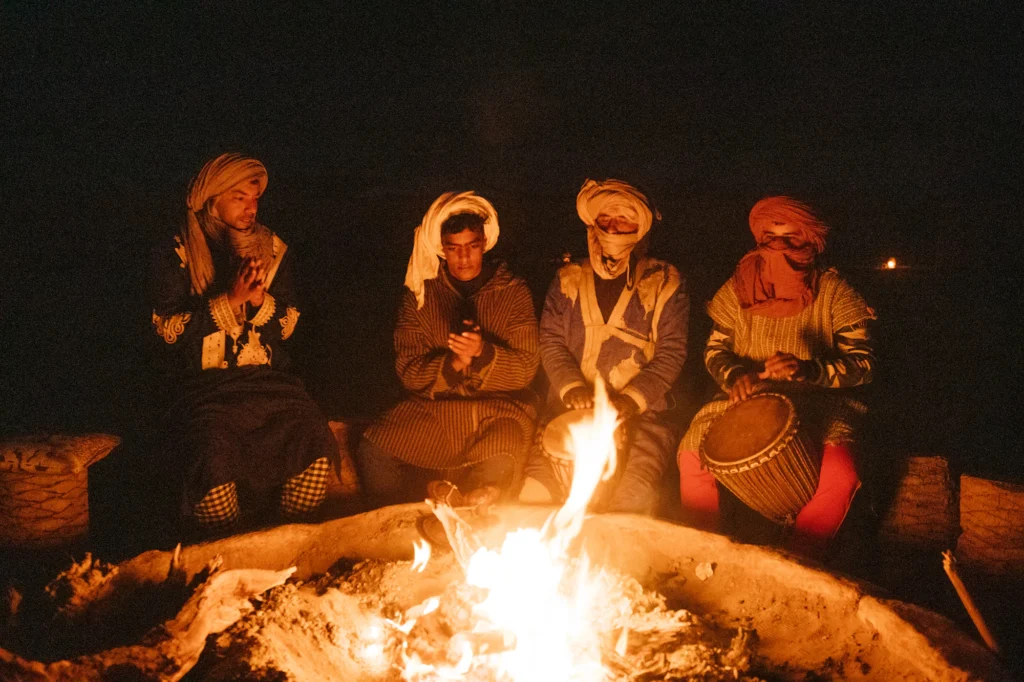
Sand heats up fast and loses its heat just as quickly after sunset. Even in October you may go from T-shirt weather at 15:00 to needing a fleece at 20:00. In December and January, nights in the camp are cold but dry: tents have thick blankets and many camps offer extra heaters or hot water bottles.
Wind and sandstorms
The windiest period is roughly March to May. A sand-laden wind (locally called chergui when it blows from the east) can reduce visibility for a few hours. Tours continue, but camel rides may be shortened. Bring sunglasses and a scarf (a chech) to cover your face; you can also buy one in Merzouga.
Tours related to this guide
- 3-Day Desert Tour from Marrakech to Merzouga
- 2-Day Desert Tour from Fes to Merzouga
- 5-Day Desert Tour from Marrakech to Merzouga
Want a trip built around your dates? Ask for a free tailor-made itinerary →
Does it rain in Merzouga?
Very rarely, with fewer than 10 rainy days a year. Occasional storms in late summer or autumn can flood the dry riverbeds for a few hours. After rare heavy rains, the seasonal lake of Dayet Srji, near the dunes, sometimes fills up and attracts flamingos.
Best time to visit Merzouga
- Best overall: October, November, March and April.
- Good with warm clothes: December to February (clear skies, great for stargazing).
- For heat lovers only: June to August. Tours start early, rest at midday and ride camels at sunset.
Whatever the month, sunrise from the top of a dune is the highlight. Read our guide to the Merzouga desert camps to choose where to sleep.
What to wear
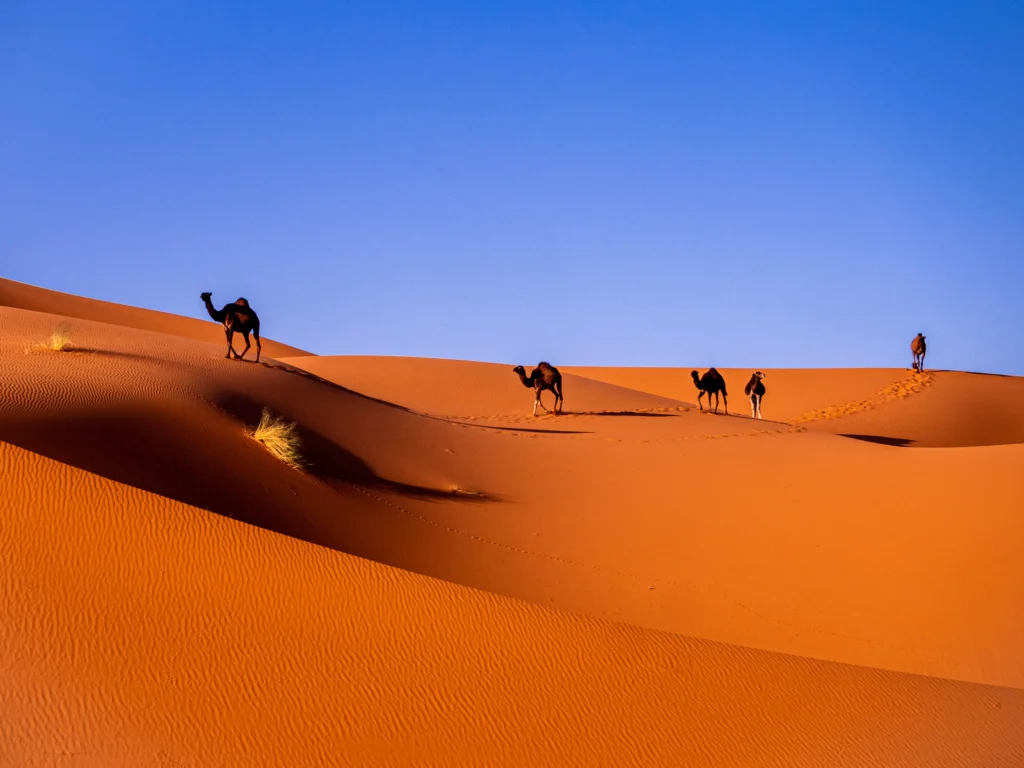
- Light, long-sleeved clothes and a hat for the day.
- A warm jacket, hat and socks for nights from November to March.
- Closed shoes or sandals you do not mind filling with sand.
- Sunscreen, lip balm and sunglasses all year.
Frequently asked questions
How hot is Merzouga in summer?
In July and August daytime temperatures usually reach 40–45 °C. Nights stay around 25–28 °C, so many travellers sleep outside the tent under the stars.
How cold does the Sahara get at night in Morocco?
In December and January night temperatures in Merzouga can fall to 0–3 °C. Camps provide heavy blankets, but bring a warm layer and a hat.
When is sandstorm season in Merzouga?
Mainly from March to May. Most days are still clear, but strong winds can lift sand for a few hours, usually in the afternoon.
What is the best month to visit Merzouga?
October and November, followed by March and April. They offer warm days, cool nights and the most comfortable conditions for camel trekking.
Keep reading
Written by the Todo Marruecos Tours team, local guides and drivers based in Morocco. Last updated: November 2026.